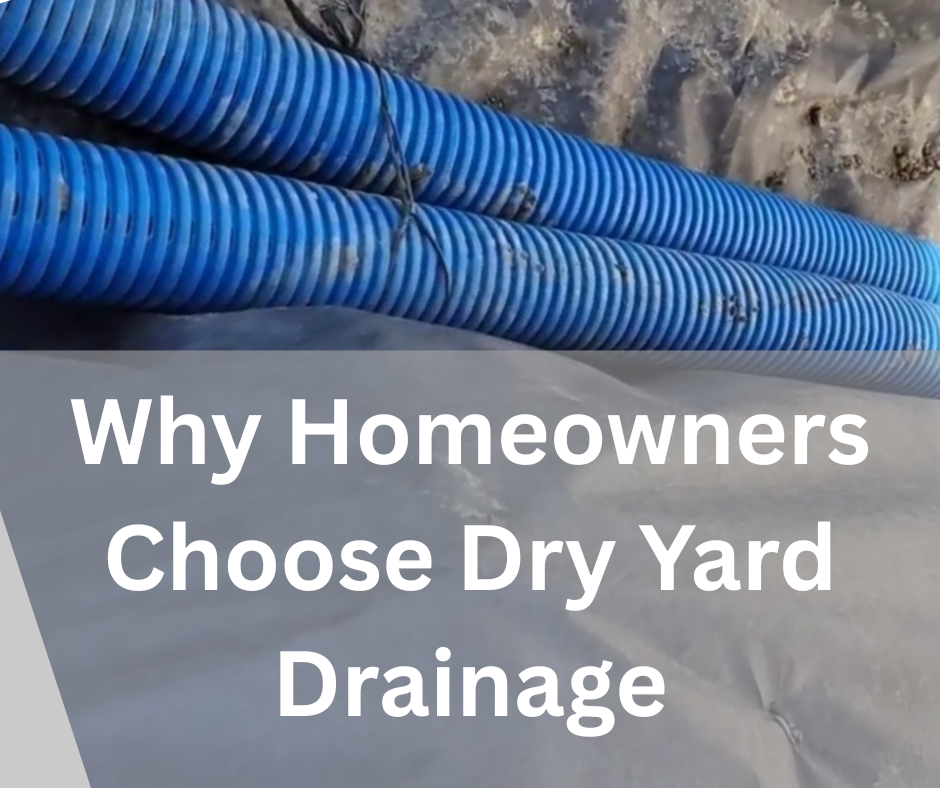
LaSalle’s Biggest Drainage Problems — And Why Homeowners Choose Dry Yard Drainage
LaSalle is known for its heavy clay soil, high water table, and flat grading, which means rainwater has nowhere to go. Homeowners in River Canard, Seven Lakes, and the Bouffard/Heritage areas often deal with:
Water pooling in the backyard
Soggy or unusable lawns
Water flowing toward the house
Downspouts flooding the foundation
Mushy ground that never fully dries
Standing water after every storm
At Dry Yard Drainage, we design systems built specifically for LaSalle’s soil and water conditions, using the right trench depth, stone size, pipe type, and sump discharge methods to guarantee results.
Our Most Popular Drainage Solutions in LaSalle
1. French Drain Systems
Ideal for clay soil and flat yards. Moves water away from your home using perforated pipe and clear stone.
2. Downspout Drain Lines
Safely carries roof water away from foundations, preventing basement leaks and erosion.
3. Backyard Drainage Channels
Perfect for soggy lawns or pooling areas. Helps restore lawn usability.
4. Sump Pump Extensions
Protects foundations by moving sump water far away from the home.
Why Homeowners Trust Us
✔ Local LaSalle-based experience
✔ Custom drainage plans designed for clay soil
✔ Clean, professional installation
✔ Clear pricing — no surprises
✔ Results you can feel after the first major rain
Book a Drainage Assessment in LaSalle
Quick, friendly, and no-pressure.
We visit the property, inspect the slope, soil, and water flow, and design the right system for your home.
Professional Drainage Services in Essex, Ontario
Essex properties often deal with flat grades or even grades sloping towards your home. After a heavy rainfall there is often nowhere for the water to go leading to standing water in yards or worse; in your basement or crawlspace. At Dry Yard Drainage, we design and install custom drainage systems that move water safely away from your home and restore your yards usability. Every system is built specific for Essex soil and conditions. These will often take the form of:
-French Drains
-Downspout Drain lines
-Dry wells or Groundwater Infiltration Systems
-Foundation Water Control Systems
Serving Essex, Maidstone, McGregor, and surrounding Essex County areas.
Professional Drainage Services in Tecumseh, Ontario
Tecumseh drainage problems usually come from a mix of flat grades, low lying areas in backyards, and storm events that create massive amounts of rainwater in a short period of time. These are the perfect conditions to overwhelm older catch basins/ storm sewers and push water towards foundation, patios, and low spots in lawns.
2016 was a year to remember when Tecumseh saw near record rainfall that caused widespread flooding and basement backups. In the years since, Tecumseh as well as other municipalities have implemented new measures for public storm water management but has left the homeowners to deal with their own properties. This is where Dry Yard Drainage come in! We diagnose and solve drainage problems in your yard so that you can use it again. No more standing water, wet soggy ground, mud in the house, water in your basement, constant noise from sump pumps.
This is where Dry Yard Drainage come in! We diagnose and solve drainage problems in your yard so that you can use it again. No more standing water, wet soggy ground, mud in the house, water in your basement, constant noise from sump pumps.
The Solutions will often take the form of:
-French Drains
-Downspout Drain lines
-Dry wells or Groundwater Infiltration Systems
-Foundation Water Control Systems
Drainage Solutions for Windsor, Ontario
Windsor homes commonly deal with standing water, soggy lawns, and foundation drainage issues due to flat or negative grades, heavy rainfall, and clay soil. There is also often the problem of the neighbors installing pools or hardscapes with no regard for managing the water runoff this produces. Another issue that home owners are often faced with is neighbors (sometimes on 3 sides) building up their lawn higher which causes all the runoff water to pool in the lowest yard.
When water has nowhere to go, it can pool near foundations, damage lawn or landscaping, and create long term moisture problems.
At Dry Yard Drainage, we provide custom drainage solutions in Windsor designed to move water away from your home effectively and permanently.
Common Drainage Problems We Fix in Windsor
Water pooling in backyards after rain
Soggy or unusable lawns
Downspouts dumping water near foundations
Water flowing towards the house
Mushy ground that never fully dries
Standing water after every storm
Our Windsor Drainage Services
French Drain Systems-Ideal for flat yards and poor drainage areas
Downspout Drain Lines- Safely redirect roof water away from foundations
Yard and Lawn Drainage - restores yard usability to wet or muddy areas in your yard
Catch Basins and Surface Drains - Capture surface water to avoid standing water which can cause damage to your yard, landscaping, or foundation
Sump Pump Discharge Extensions and Sump Pump Solutions or Standing Water- Move water away from your home to a proper discharge point.
Why Windsor Home Owners Choose Dry Yard Drainage
Drainage-focused design
Clean, professional Installations
Clear pricing with no surprises
Excellent communication
Results you will see after the first major rainfall
Book a Drainage Consultation in Windsor
We offer on-site drainage assessments to evaluate grading, soil, and water flow. From there, we design the right system to fix your water problems.
Drainage Solutions for Lakeshore, ON
Lakeshore homes commonly deal with standing water, soggy lawns, and water flowing towards foundations-especially after heavy rainfall or snowmelt. Many Lakeshore properties also have flat grades - growing up in Lakeshore my Dad would say, “You can see your dog run away for a week!” These flat yards often equate to standing water and few options of how to safely evacuate it.
Another extremely common drainage problem in Lakeshore take the form of downspouts discharging too close to houses and foundations. Over time, this can lead to lawn damage, soil erosion, water near the foundation and moisture problems.
At Dry Yard Drainage, we provide custom drainage solutions in Windsor designed to move water away from your home effectively and permanently.
Common Drainage Problems We Fix in Windsor
Water pooling in backyards after rain
Soggy or unusable lawns
Downspouts dumping water near foundations
Water flowing towards the house
Mushy ground that never fully dries
Standing water after every storm
Our Windsor Drainage Services
French Drain Systems-Ideal for flat yards and poor drainage areas
Downspout Drain Lines- Safely redirect roof water away from foundations
Yard and Lawn Drainage - restores yard usability to wet or muddy areas in your yard
Catch Basins and Surface Drains - Capture surface water to avoid standing water which can cause damage to your yard, landscaping, or foundation
Sump Pump Discharge Extensions and Sump Pump Solutions or Standing Water- Move water away from your home to a proper discharge point.
Why Windsor Home Owners Choose Dry Yard Drainage
Drainage-focused design
Clean, professional Installations
Clear pricing with no surprises
Excellent communication
Results you will see after the first major rainfall
Drain Services in Belle River, ON
Belle River drainage solutions for soggy yards, pooling water, and wet basements. French drains, downspout drain lines, catch basins, and sump pump discharge-installed clean and built to last.
Common Drainage Problems we Fix in Belle River
If you are dealing with any of these problems, proper drainage is often the solution- not more topsoil.
Water running towards the foundation of the house
Basement dampness and musty smells
Our Belle River Drainage Services
French Drain Systems-Ideal for flat yards and poor drainage areas
Downspout Drain Lines- Safely redirect roof water away from foundations
Yard and Lawn Drainage - restores yard usability to wet or muddy areas in your yard
Catch Basins and Surface Drains - Capture surface water to avoid standing water which can cause damage to your yard, landscaping, or foundation
Sump Pump Discharge Extensions and Sump Pump Solutions or Standing Water- Move water away from your home to a proper discharge point.
Why Belle River Home Owners Choose Dry Yard Drainage
Drainage-focused design
Clean, professional Installations
Clear pricing with no surprises
Excellent communication
Results you will see after the first major rainfall
Trench Drain in Yard: When You Need One and How It Works
What Is a Trench Drain?
A trench drain is a narrow channel with open slots in a grate often made out of plastic or metal that is installed in the ground to capture surface water. It is typically used on impermeable surfaces (surfaces that water cant flow through) such as patios or concrete.
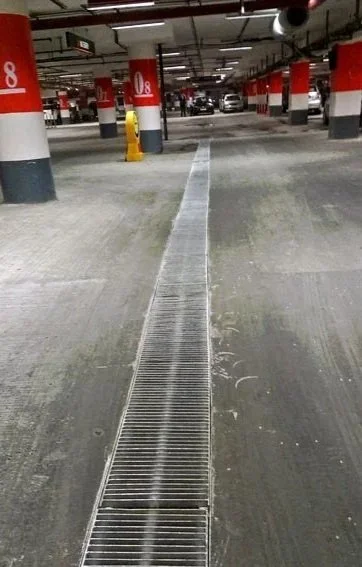
Example of a Trench Drain or Track drain, also known as a Channel drain in a parking garage.
Can a trench drain be used in a yard or lawn?
Answer: Yes, but rather than using a track drain, a catch basin with a grated top is a more effective solution to standing water in a yard!
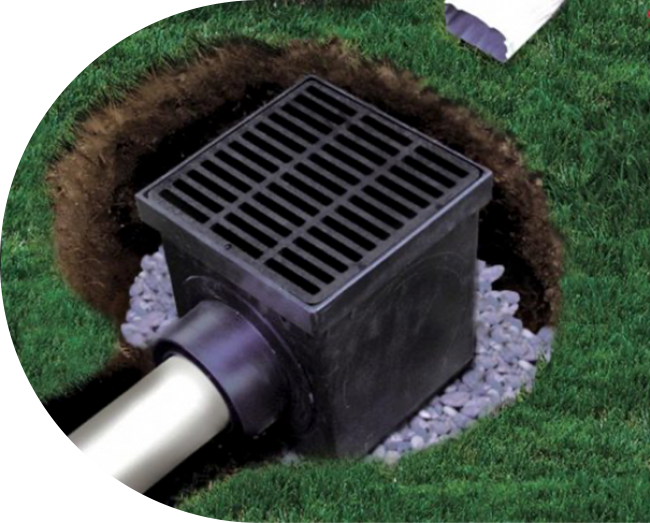
Here is an example of a square shaped catch basin with sump
What’s the difference between a catch basin and a track drain?
A track drain as described above is a long channel which is perfect for collecting running water off of a surface such as a driveway or patio. Track drains can be long and continuous-often running the width of the driveways or matching the length or width of whatever surface they are servicing.
A Catch basin is usually a circular or square grate and is often ranging from 4’’ to greater than 2’ in diameter. Rather than catching runoff using a long channel running the width of a surface, insteads they are positioned in the lowest point of a surface often in the bottom of a “bowl shape” slope to catch all the runoff from up to 360 degrees.
WHAT MAKES A CATCH BASIN A BETTER DRAINAGE SOLUTION FOR A YARD RATHER THAN A TRENCH DRAIN?
Catch basins have a smaller physical footprint in that they require less excavation to install which allows for more lawn to be preserved during the installation process.
Catch basins themselves cost less than trench drains-the longer the trench drain the higher the cost ( material choices also can effect the cost of trench drains such as choosing aluminum over plastic.
Catch basins provide better debris control through the use of a sump or lower area to catch and allow sediment to collect in the bottom, which can be cleaned out and prevent sediment from clogging up the pipe.
Catch basins can have perforations at the bottom often combined with landscape fabric and drainage stone to allow for any excess water to percolate into the soil (trench drains may hold water for an extended amount of time unless sloped) When water is allowed to completely drain out you eliminate the risk of bad odors and mosquitoes breeding.
Catch basins are much easier to maintain as all sediment is captured in small localized section which can be reached by taking the lid off. Trench drains can be difficult to access as grates are often not detachable and the whole trench drain collects debris.
Catch basin are perfect in areas with clay soil (common in Windsor-Essex), where surface water often can’t soak in fast enough and standing water makes yards unusable and muddy.
Trench Drain and Catch Basin vs French Drain
Homeowners often ask which is better: a trench drain, catch basin, or a French drain.
Trench Drain and Catch Basin
Handles surface water
Works immediately during rain
Installed shallow
grate is visible
French Drain
Handles subsurface water
Installed deeper
Best for soggy soil and foundation issues
Hidden once installed
In many yards, the best solution is a combination of both.
Placement is critical — installing a trench drain in the wrong spot can make it ineffective.
How Much Does a Trench Drain in a Yard Cost?
Costs vary based on length, depth, soil conditions, and where the water can be discharged.
Most residential trench drain, catch basin, and French drain installations range from $3,500 to up to $10,000+, depending on complexity. Clay soil, longer runs, or tie-ins to storm systems can increase the cost.
A site assessment is the best way to get an accurate price.
Do Catch Basin Work in Clay Soil?
Yes — and this is one of the biggest reasons catch basins are used in yards with heavy clay. Since clay drains poorly, surface interception is often more effective than relying on soil absorption alone.
Final Thoughts
If your yard holds water or channels runoff toward your home, a trench drain or catch basin can be a simple and effective solution for yard drainage problems. The key is proper placement, slope, and discharge — all of which should be evaluated before installation.
If you’re unsure whether a trench drain, French drain, catch basin, or combination system is right for your yard, a professional drainage assessment can save time and money in the long run.
Why Water Pools in Windsor Yards After Snow Melt
Every spring, many Windsor homeowners notice the same problem: standing water that lingers in the yard long after the snow melts. This isn’t just inconvenient — it’s usually a sign of poor drainage that can lead to bigger issues if ignored.
Clay Soil Is the Biggest Reason
Much of Windsor-Essex sits on heavy clay soil. Clay doesn’t absorb water easily, so when snow melts, water has nowhere to go. Instead of soaking into the ground, it stays on the surface and collects in low spots.
Frozen or Saturated Ground
During late winter and early spring, the ground is often frozen or already saturated. Meltwater can’t drain downward, so it spreads across the yard and pools in the lowest areas.
Poor Grading Around the Home
If the yard slopes toward the house instead of away from it, melting snow naturally flows back toward the foundation. This can create soggy lawns, wet garden beds, and even water against the basement wall.
Downspouts Adding to the Problem
Downspouts that discharge close to the house or into low areas can overwhelm the yard during snow melt, making pooling much worse.
How Drainage Helps
Proper drainage solutions like catch basins, French drains, or redirecting downspouts can collect and move meltwater away before it causes damage.
If your yard stays wet every spring, a drainage assessment can identify the cause and prevent long-term issues.
French Drain vs Catch Basin: Which Is Right for Your Lawn?
When dealing with standing water in a yard, homeowners are often told they need a French drain. In reality, that isn’t always the best solution. The right system depends on how and where water is collecting.
What a French Drain Is Best For
A French drain works below the surface to manage subsurface water. It’s ideal when:
Soil stays soggy for long periods
Water seeps through the ground
Drainage issues affect the foundation area
French drains are great for relieving water pressure in the soil, especially in clay-heavy areas.
What a Catch Basin Is Best For
A catch basin collects surface water. It’s usually the better choice when:
Water pools in one specific low spot
Water flows across the lawn after rain or snow melt
The problem is visible on the surface
Catch basins have a smaller footprint and collect water from all directions, making them very effective for standing water.
Which One Do You Need?
Pooling water in one spot → Catch basin
Soggy soil across an area → French drain
Severe problems → Often a combination of both
Choosing the wrong system can lead to poor results, even if the installation is done correctly.
A proper assessment ensures the solution matches the problem — not the other way around.
How to Tell If You Need Drainage Before It Becomes a Basement Problem
Many basement water issues start outside — long before water ever enters the home. Catching drainage problems early can prevent expensive repairs later.
Warning Signs in the Yard
You may need drainage improvements if you notice:
Standing water after rain or snow melt
Muddy areas that never fully dry
Grass that dies or turns yellow in certain spots
Water flowing toward the house
Water Near the Foundation
If water regularly sits near the foundation walls, it can increase pressure against the basement. Over time, this can lead to leaks, cracks, or moisture problems inside.
Downspouts Discharging Too Close
Downspouts that release water near the foundation can overload the soil and force water downward toward the basement.
Why Early Drainage Matters
Addressing drainage early:
Reduces stress on foundation walls
Prevents basement leaks
Is usually less invasive and less expensive
Protects landscaping and lawn health
Exterior drainage solutions are often the first and best line of defense against basement water issues.
If you’re unsure whether your yard drainage is putting your basement at risk, a drainage assessment can provide clarity and peace of mind.
Why We Installed a Permanent Sump Pump Discharge System Instead of Another Temporary Hose
In Windsor-Essex homeowners often deal with a very common issue: their sump pump discharge line. Common issues can range from:
- having to extend a long unsightly hose to their front yard
- grass that remains wet and muddy from the sump pump constantly running
-the discharge pipe freezing in the winter
- having to cut the grass around the discharge line
- a discharge line that is too close to the foundation or a neighbors house
………. the list goes on.
At Dry Yard Drainage, we have perfected a Freeze-Protected Sump Discharge System
While temporary hoses or single pipe sump pump discharges can work for short periods, they often create bigger problems over time — especially during winter and spring melt conditions.
When the protection of your foundation and basement are reliant on the sump pump discharging water properly, a single pipe or hose is often not enough as these are:
Prone to freezing in colder temperatures
Difficult to maintain and mow around
Visually unappealing
Not providing a long-term drainage solution
Are often too close to the foundation and simply cycle water over and over.
That’s where a permanent sump discharge system made more sense.
The Problem With Frozen Sump Discharge Lines
When a sump pump discharge line freezes, the water has nowhere to go. This can cause:
Water backup at the sump pit
Excess water around the foundation
Pump strain or premature pump failure
Ice buildup around the home
Wet areas in the yard during thaw cycles
A proper buried discharge system helps eliminate those issues by safely carrying water away from the home year-round.
Our Solution
For this project, we installed a complete buried sump discharge system designed for reliability, serviceability, and winter performance.
The system included:
A freeze protection fitting near the home
Buried solid PVC discharge pipe
A drywell system for underground water dispersal
An overflow/outlet line for excess water management
Clean grading and lawn restoration after installation
The freeze protection fitting is especially important in our climate because it helps prevent pressure buildup and freezing issues during harsh winter conditions.
Why We Use Solid Pipe Instead of Corrugated Hose
Temporary corrugated hoses are common, but they can sag, crush, clog, and freeze more easily over time.
For this installation, we used solid buried pipe to create:
Better long-term durability
Improved water flow
Reduced freezing risk
Cleaner appearance
Less maintenance for the homeowner
The goal is always to create a system that works reliably without needing constant attention.
Clean Installation Matters
Drainage work should not leave a yard looking destroyed afterward.
After installing the system, we carefully backfilled, compacted, and restored the lawn area to blend back into the existing yard as cleanly as possible.
A lot of homeowners are surprised how minimally invasive a properly planned drainage installation can be.
Permanent Drainage Solutions in Windsor & Essex County
At Dry Yard Drainage, we focus specifically on exterior drainage and water management solutions, including:
Sump discharge systems
French drains
Downspout drainage
Catch basins
Yard drainage solutions
Wet yard correction
Every property is different, so the best drainage solution depends on grading, soil conditions, discharge location, and how water moves through the yard.
If you are dealing with freezing sump lines, standing water, or drainage problems around your home, we can help assess the situation and recommend a straightforward solution.